Jensen Beach Concrete helps homeowners in Jensen Beach, Stuart, and Palm City with new concrete driveways, full replacements, widening, and extensions. Homeowners usually need this work when an original driveway from the 1970s–90s housing stock has cracked or settled past the point of patching, or when the household has outgrown a single-width drive. Call or send the callback form — with rough dimensions, a ballpark range can usually be discussed on the first call.
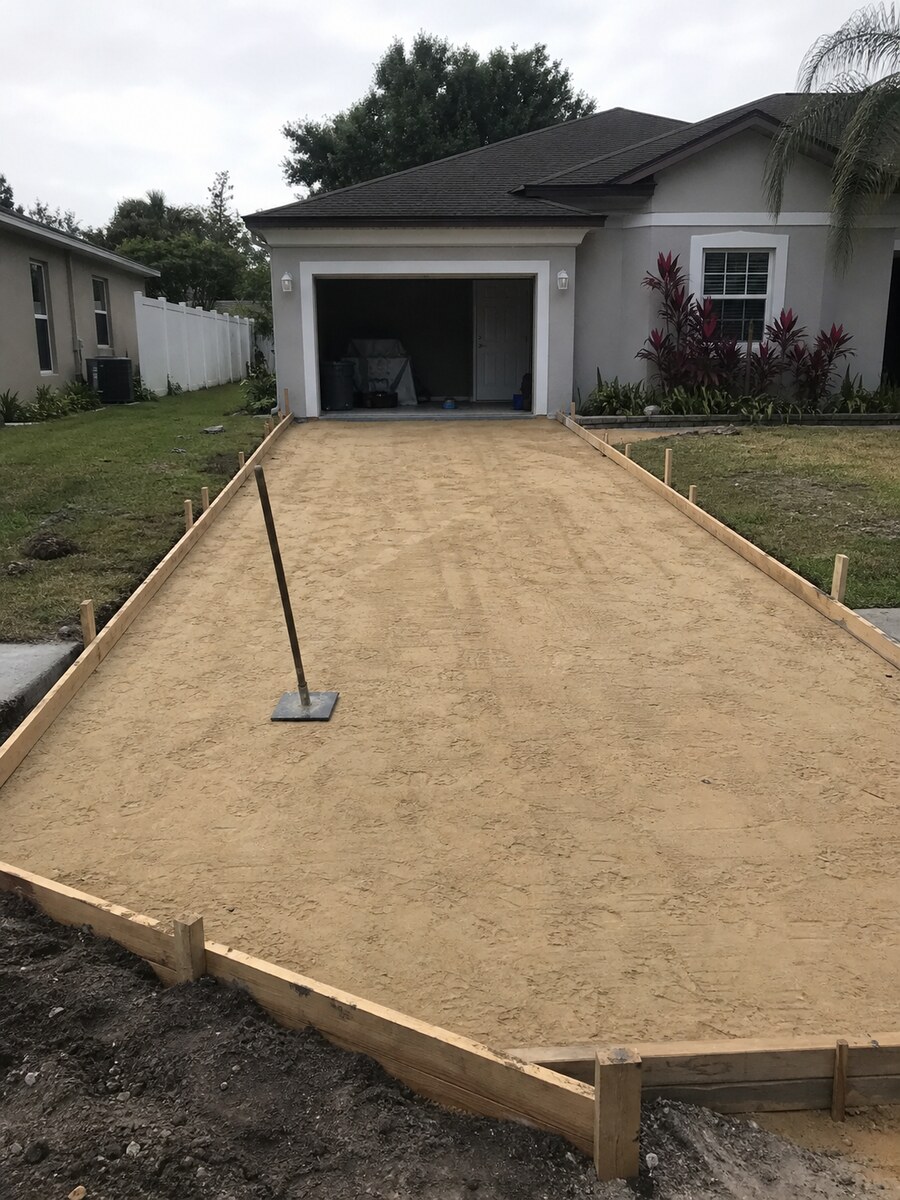
A driveway that lasts in Martin County starts below the surface. Existing concrete or asphalt comes out first, then the base gets graded and compacted — the step that matters most in sandy soil, because a driveway is only as stable as what's under it. Forms set the layout, reinforcement goes in, and the pour is finished with control joints placed to manage where concrete will naturally want to crack. Broom finish is standard for traction; the finish and layout are settled before anything is poured.
Long diagonal cracks that keep widening, sections that sit at different heights, and surface flaking that exposes rock are all signs the slab is failing structurally, not cosmetically. Patching a settling driveway is temporary by nature — the new material sits on the same shifting base. Replacement resets the base prep, which is why replaced driveways outlast repeatedly-patched ones. If the damage is limited to the surface, repair or resurfacing may still be the right call, and the on-site look sorts that out honestly.
Square footage sets the baseline. From there: whether existing concrete needs demo and haul-away, the thickness required for vehicle loads, how much regrading the base needs, and access for the concrete truck. Corner lots and long setbacks common in older Jensen Beach neighborhoods change the pour logistics. Extensions and widening price differently than full replacements because they tie into existing concrete. The cost factors page covers the full breakdown.
Driveways are measurable, so the first call can usually put a ballpark range on the table if you know rough dimensions — paced off is fine. The final quote follows an on-site measure that confirms access, grade, and demo scope. If your community requires HOA approval for driveway changes, the quote can include the dimensions and finish details associations typically ask for.
Often, yes. An extension pours new concrete against the existing slab with a proper joint between them. The catch is appearance — new concrete cures lighter than a decades-old slab, and the two won't match immediately. If the existing driveway is also failing, replacing everything at once usually makes more sense than extending a slab that's on its way out.
Demo, base prep, and the pour typically happen across a few days, weather permitting. The longer wait is cure time — plan on about a week before parking on it. Summer storm patterns in Martin County can shift pour days, which gets discussed when scheduling.
No. Dimensions speed up a ballpark, but describing it works too — "standard two-car, maybe 35 feet to the street" is enough to start a real conversation. The on-site measure produces the final numbers either way.